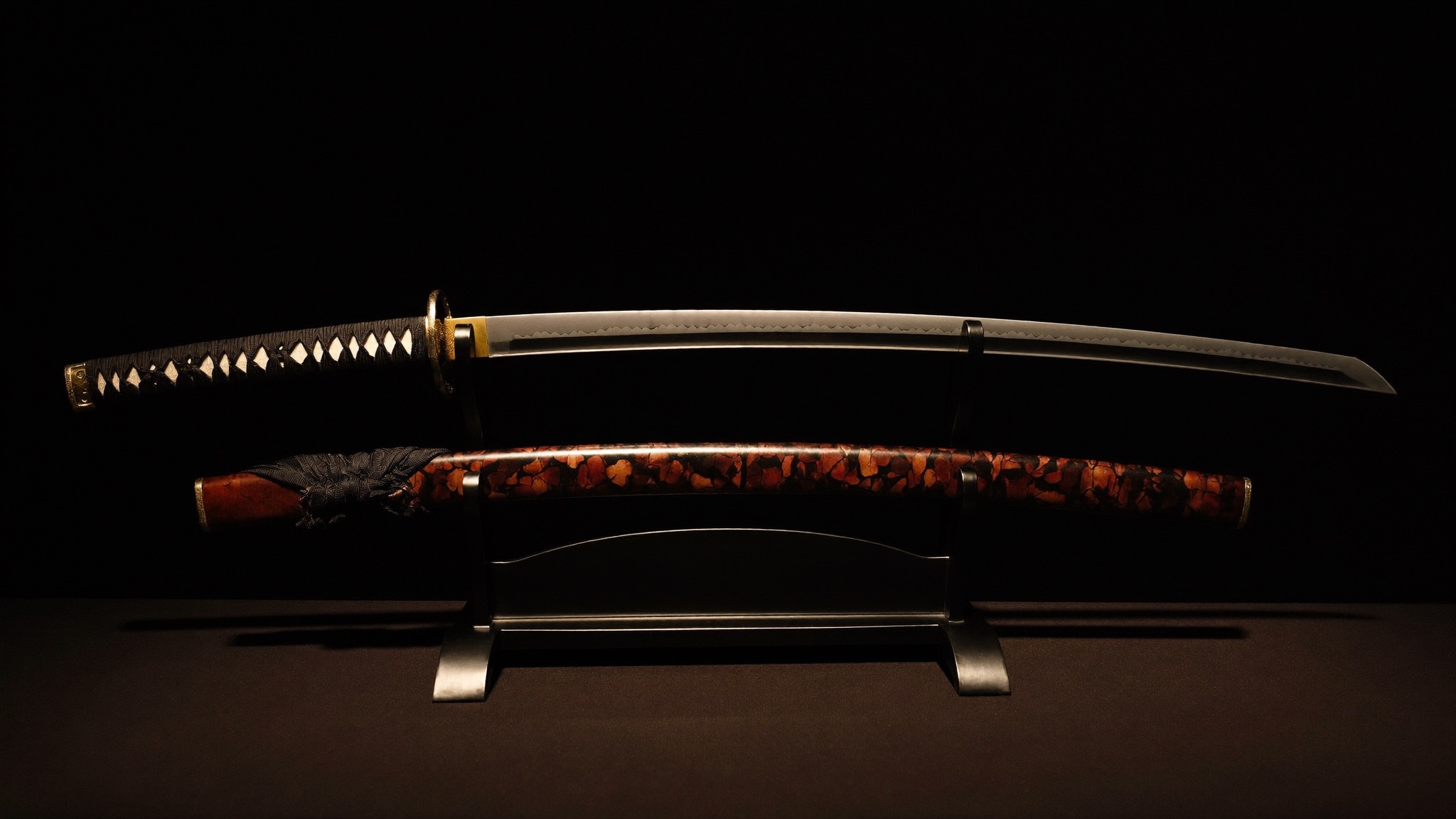
Samidare hamon
A straight temper line broken by soft descending strokes — rain that falls without wind. Visible only when the blade is moved against light.
Gold menuki
Cast and chased by the forge’s metalworker. Positioned to sit under the middle fingers, felt more than seen.
Kissaki
The point geometry is finished by the smith alone. It is the signature no one else may touch.
Samidare
Craft record
Notes from the bench
The steel began as iron sand from the Hii river, smelted in a clay tatara over three sleepless days. Of the two tonnes of tamahagane the burn produced, the smith kept eleven kilograms — the rest did not meet the house standard.
The blade was folded thirteen times, yielding roughly eight thousand layers, then clay-coated and quenched in water the smith warms to the temperature of a March river. The hamon that resulted is a suguha broken by soft descending strokes — the smith’s named pattern, "samidare," rain that falls without wind.
Polish took ninety days across two artisans of the Hon’ami line. The blade is mounted in plain black lacquer, deliberately silent, so that nothing competes with the steel.
Provenance
The record of its making
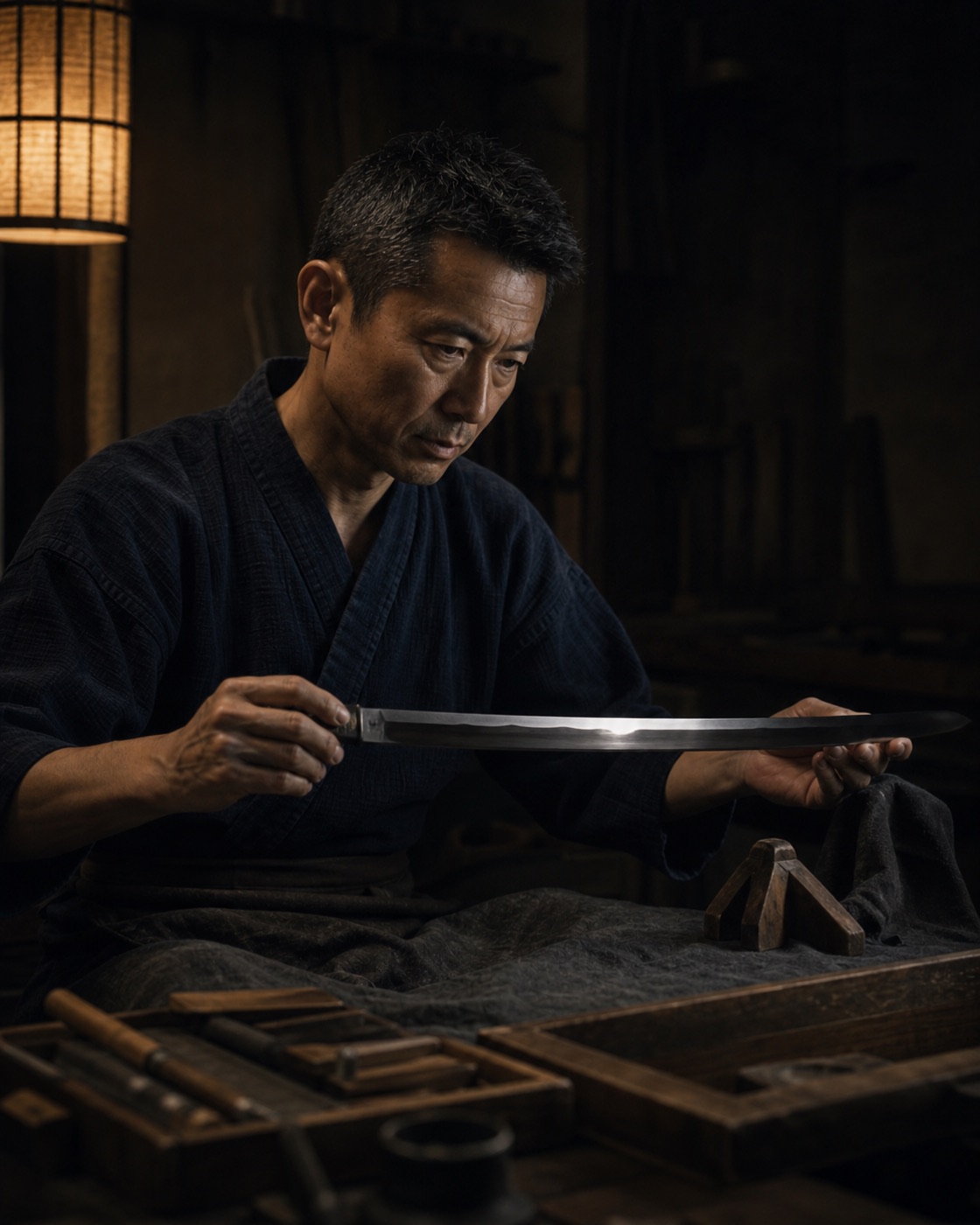
Smelted
Three-day tatara burn, eleven kilograms kept
November 2024Forged
Thirteen folds, clay-coated, water-quenched
January — May 2025Polished
Ninety days, two artisans of the Hon’ami line
June — September 2025Sealed
Entered into the Register as Work VII of XII
January 2026
Entered into the Register · Work VII of XII · 2026